

Until 18 July, the corridor connecting the two buildings of the Santa Creu Clinic is hosting the ACC
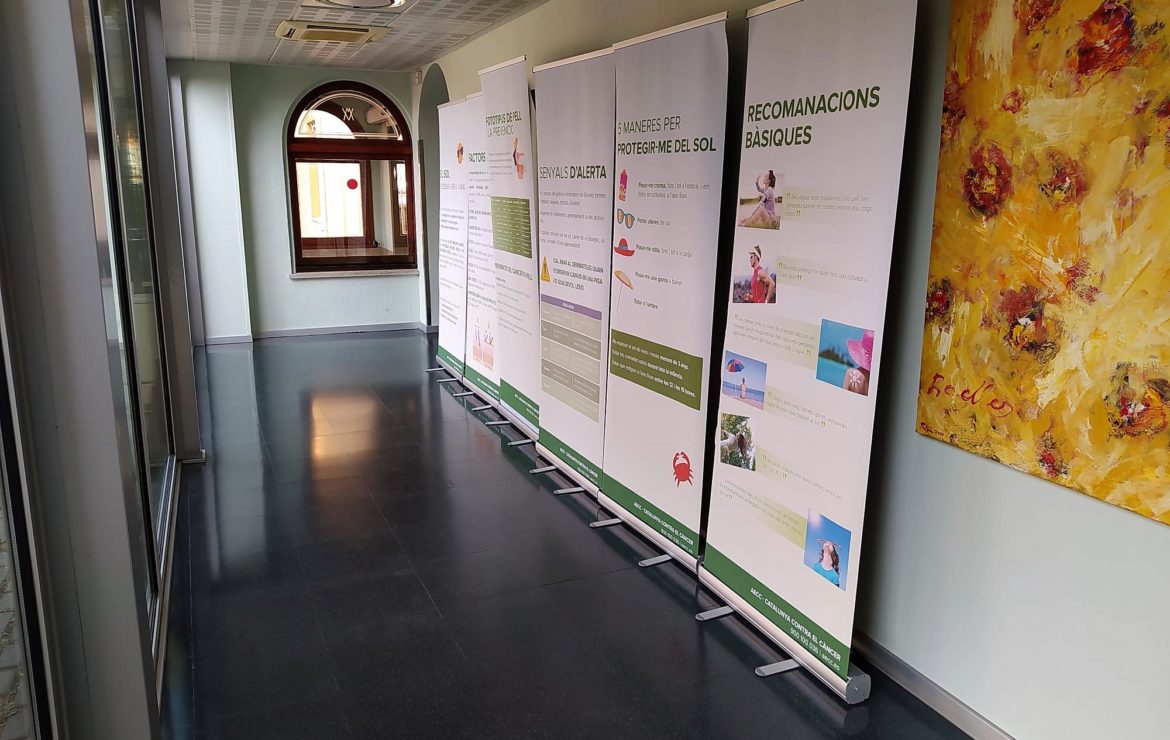
Until 18 July, the corridor connecting the two buildings of the Santa Creu Clinic is hosting the ACC
Consta de sis expositors enrotllables i busca conscienciar la població de la importància de protegir la pell de les radiacions ultraviolades.
Until 18 July, the corridor connecting the two buildings of the Santa Creu Clinic is hosting the ACC-Catalonia against Cancer’s travelling exhibition on solar prevention and skin cancer. The initiative aims to raise public awareness of the importance of protecting the skin from ultraviolet radiation, to publicise the fact that it has a memory and to avoid overexposure and sunburn.
ACC-Catalonia Against Cancer promoted this exhibition on the occasion of World Skin Cancer Day, which is commemorated every 13 June. Throughout the summer, the six roll-up displays will be touring different centres in the Girona area.
The exhibition explains how ultraviolet radiation affects our skin, as well as the benefits and harms that will appear in the short and medium term if the sun is abused or if we expose ourselves without adequate protection. It also provides specific information on how to identify your skin type, how to apply sunscreen and some tips on how to enjoy a summer with healthy skin.
Skin cancer
Solar radiation continues to be the main risk factor for skin cancer, so the use of sunscreen and taking certain protective measures are of vital importance to protect oneself from the sun’s rays. The main types of skin cancer are basal cell carcinoma, squamous cell carcinoma and melanoma.
Skin carcinomas in Catalonia have an incidence rate of 45 cases per 100,000 inhabitants in 2020 (source: ACC Observatory), with an increasing trend in incidence in recent years. In fact, in the last year more than 3,500 cases of non-melanoma skin cancers have been detected in Catalonia (336 in Girona).
To prevent this type of tumour, it is always advisable to have your skin checked annually by a dermatologist to determine whether you have any bumps, birthmarks or pigmented areas whose colour, size or shape is out of the ordinary. An early diagnosis will always mean a better prognosis for the disease.
Related posts